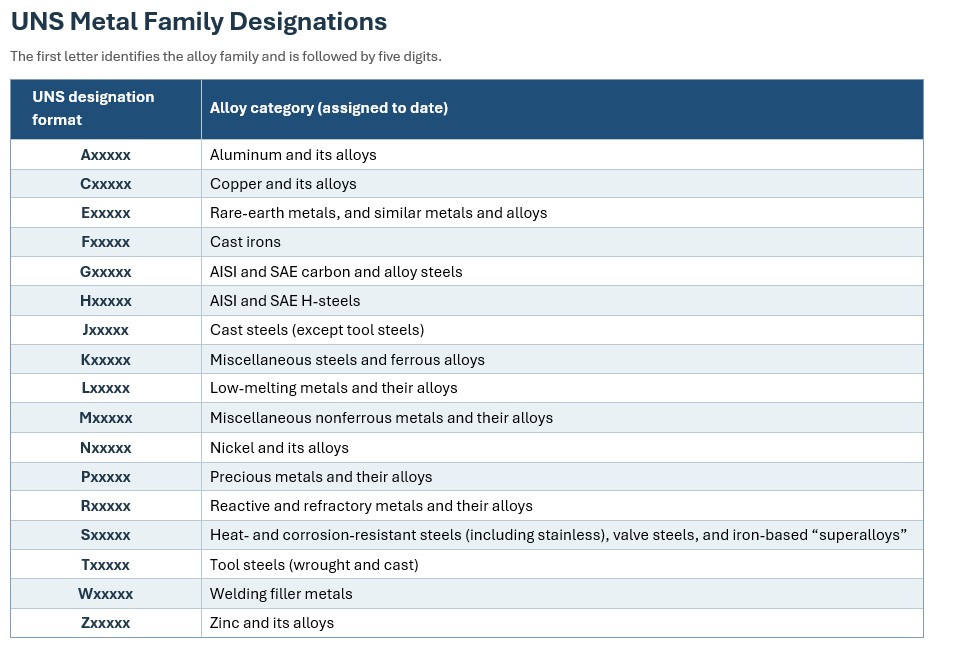

When specifying materials for pressure vessels, heat exchangers, and piping, you may see material designations such as UNS N06625. The Unified Numbering System, UNS, was created to standardize the naming of metals and alloys. Instead of relying solely on trade names or specifications from various codes and standards, the UNS number provides a common identifier based on the material’s chemical composition. This helps engineers, fabricators, and material suppliers clearly communicate exactly which alloy is required.
UNS numbers are important because a single material may be listed in multiple standards, such as ASME, ASTM, or AWS specifications. For example, 316L stainless steel is identified as UNS S31603 regardless of the specification in which it appears, and regardless of product form. By referencing the UNS number, engineers can verify material compatibility, compare allowable stresses, ensure proper welding procedures, and
avoid costly material substitutions. While a UNS number identifies the alloy chemistry, it does not specify product form, mechanical properties, or heat treatment requirements, so the applicable material specification must still be used. Pressure vessel and piping materials are commonly carbon steel (Kxxxxx), stainless steel (Sxxxxx), or a nickel alloy (Nxxxxx). Understanding UNS numbers helps ensure that the correct material is selected, purchased, and fabricated for safe and reliable service.